


Career Information
Contemplating a career centered on mathematics? Mathematical research and education are at the heart of some careers, while other careers utilize mathematics and its applications to build and enhance important work in the sciences, business, finance, manufacturing, communications, and engineering.
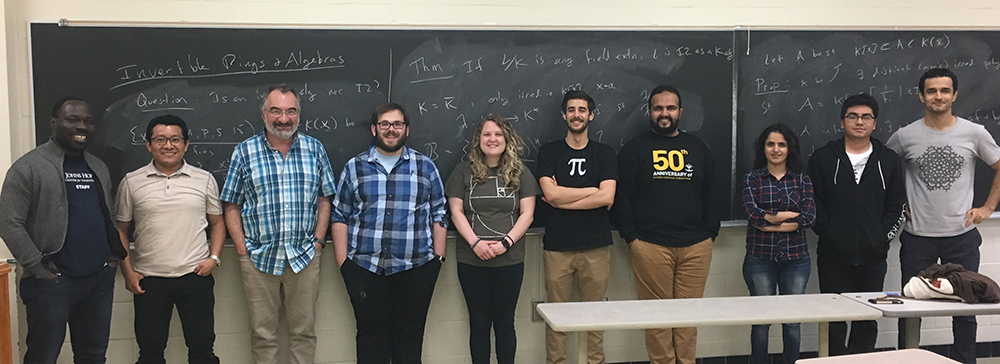
Explore How Mathematics Can Help You Build Your Career
- Business Entrepreneurship Government Industry Nonprofit (BEGIN) Careers
- The Science of Effective Mentorship in STEMM
- “Careers for Numbers People”
- Mathematical Moments: Explore the role mathematics plays in science, technology and human culture through colorful posters.
Students: Prepare for a Career in Mathematics
- Explore job services
- Business Entrepreneurship Government Industry Nonprofit (BEGIN) Career Preparation
Undergraduate Students:
- Visit the guide Graduate School: Considering & Choosing.
- Find school-by-school information graduate study at Find a Graduate Program.
- Did you know undergraduates can get experience in mathematical research? Explore summer REU programs.
High School Students:
- Have you considered a challenging summer math camp to explore the world of mathematical research along with other gifted high school students from around the country?
- Need help with homework or self-study? Find a variety of resources on the AMS for Students page.
Photo courtesy Ohio University AMS Graduate Student Chapter