|
|
Apportionment: The History of Apportionment in America
|
2. The History of Apportionment in America
The history of the way that the House of Representatives in the United States has been apportioned is fascinating. It involves many colorful and powerful figures in United States history. The United States is very unusual in having a legislative branch with two independent parts, the Senate and the House of Representatives. This somewhat unique situation came about because the people responsible for creating the United States needed a way to compromise concerning their views about the new country they were forming. On the one hand, there were people from relatively unpopulated states where there were many landowners and there were people from relatively highly populated states with large urban populations. By having one legislative branch in which each former colony would have equal numbers of representatives (two senators for each state) and one legislative branch based on population, a compromise was reached. However, from the very start, people from different states were anxious to protect their own interests in the House of Representatives. The more seats one had, the safer it would be for one's point of view. It is useful to remember that during the early days of the United States no one foresaw the effect of having two dominant political parties at nearly all times of the country's history. The Constitution, in fact, makes no mention of political parties.
Among the very first causes of friction between the people who created the new country was how to apportion the House of Representatives. Right from the beginning there were various proposals. The reason for the difference was the observation that different methods resulted in different numbers of seats for the different former colonies. Using the principle more is better, the protagonists involved typically came down in support of that method which did the best for their personal interests. Furthermore, it was also true that one could defend different choices of how to apportion with reasonable sounding arguments. After the 1790 census, rival methods emerged for how to apportion the House of Representatives, using what today have come to be called Hamilton's method and Jefferson's method, which will be described below. George Washington, faced with a bill which gave rise to an apportionment that he was unable to support, vetoed the bill that Congress presented. This was the first time in the history of the new country that the veto power of the President was used and only one of two times that Washington used the veto power.
Jefferson's method was used for the 1790 apportionment (h=105) and continued to be used until 1840, when a method suggested by Daniel Webster was adopted. During this period the debate centered around the statistical fact that Jefferson's method was systematically giving large states more than their share, that is, the method is biased in favor of large population states. In 1850 Vinton's method, in essence Hamilton's method, became law and this method remained on the books until the turn of the 20th century. Yet for complicated reasons filled with political wrangling, ad hoc approaches to apportionment were used. In 1901 Webster's method was used, reacting in part to the realization that Hamilton's method was subject to allowing a state to lose seats when the House of Representatives increased in size, the so-called Alabama paradox, and strange behavior when a new state was added to the union (known as the new state paradox). In 1911 Webster's method was used with special provision for what to do if a new state entered the Union. Astonishingly, in 1920, despite the new census, no new apportionment of the House of Representatives occurred, in essence, because Congress could not agree on a way to carry out an apportionment which could be enacted into law! For the 1930 census Webster's method was used.
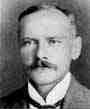
Of particular interest to mathematicians is the work of Edward Vermilye Huntington (1874-1952). Huntington was associated with Harvard University for much of his career, having been appointed there as an instructor in 1901 and having retired in 1941. In addition to his work on apportionment he is known for his work in axiomatic geometry. (Huntington served as President of MAA, vice-President of AMS, and President of AAAS, a remarkable accomplishment!) During the years of the First World War, when Huntington did work for the military in the area of statistics, or shortly thereafter, he learned of the apportionment ideas of Joseph A. Hill. He revised ideas of Hill to obtain a rigorous apportionment method, which he referred to as the Method of Equal Proportions. Huntington's method was a member of the same family of methods as those of Jefferson, Webster, President John Quincy Adams and James Dean (not the actor), who was a Professor of Mathematics at the University of Vermont. Although Dean's method and that of Adams have never been used in America, they have been part of the debate and of court cases that deal with the best method to use.
Extensive debate among experts about which of the many methods that might be used for apportionment simmered in the background as Congress was unable to decide on an apportionment during the first part of the 20th century. The Speaker of the House, Nicholas Longworth, suggested that the National Academy of Sciences make an objective study of the problem. A committee of mathematicians consisting of G.A. Bliss (1876-1951), E.W. Brown (1866-1938), L. P. Eisenhart (1876-1965) and Raymond Pearl (1879-1940) was formed to investigate the situation.
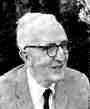
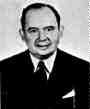
Their report indicated support for Huntington's method. Rather later an even more prestigious group of mathematicians provided a report to the President of the National Academy of Sciences on apportionment methods. The report was signed by Harold Marston Morse (1892-1977), John Von Neumann (1903-1957), and Luther Eisenhart (who had been involved with the 1929 report also). The report again supported the Huntington-Hill method.
Some have claimed that these reports show more loyalty to Huntington than to fairness principles for solving the CAP problem. In any case, the political wrangling of the period, with the economic realities of the Depression and the war situation in Europe as a background, resulted in congressional approval of a bill in 1941, which was signed by President Roosevelt, of an apportionment based on the 1940 census. This bill was noteworthy in that it stated that apportionment built into the bill, Huntington's Equal Proportions Method, was to be used regularly in the future, thereby avoiding the battles that had occurred every 10 years in the past after each new census. Furthermore the House size h was fixed at 435 (except for the ad hoc consequences of when new states were added to the United States). In essence, the consequence of this law was to exchange battles within Congress for battles between the states, members of Congress, the administrative agencies carrying out the law (Census Bureau and Department of Commerce) and the courts. Many cases eventually reached the Supreme Court where, so far, the Huntington-Hill method has survived and continues to be used to apportion the House of Representatives, though apportionment cases arising from the 2000 census (not specifically involving Huntington-Hill) are still not resolved. For 2000, Huntington-Hill and Webster would give the same apportionment; Dean's method would give Montana one more seat and North Carolina one less (other states the same) than Huntington-Hill; and Hamilton's method would give California one fewer seat and Utah one more seat than Huntington-Hill. Adams' method and Jefferson's Method would give California a number of seats that violates the quota fairness rule.
-
Introduction
-
The History of Apportionment in America
-
Apportionment in Europe (and Other Democracies)
-
References